GLOBAL: In Q2 2026, Shopee’s GMV grew 28.4%, while core marketplace revenue rose 65.6%, climbing from roughly 8.6% to 11.1% of GMV, an increase of 250 basis points. The market read it as monetization finally working.
Sea’s broader take rate reached 14.6%, including logistics and fulfillment services and products owned and sold directly by Shopee. Core marketplace revenue excludes those, leaving mainly what sellers pay to transact and to be seen.
Advertising revenue rose more than 70%, adding around 90 basis points to the overall expansion. The remaining 160 basis points came primarily from transaction fees.
BRAZIL provides the clearest visible source of that expansion. Q2 was the first full quarter under the March fee table, which raised charges across price bands and removed the BRL 100 commission cap. The same GMV now generates higher transaction revenue before a seller buys a single ad.
GLOBAL orders grew 27.5% against GMV of 28.4%, leaving average ticket almost flat. In BRAZIL, Shopee reported a rising basket size. The combination matters: more value per basket now flows through an uncapped commission structure.
But the March reset narrowed much of Shopee’s seller-cost gap with Mercado Libre. And only weeks later, Full+ began rebating up to two commission points on eligible listings, in exchange for routing inventory through Shopee’s fulfillment network.
That rebate is the first sign that Shopee may be approaching its own commission ceiling in Brazil, a ceiling still defined by MELI’s seller charges. Preserving its seller-cost advantage limits how far Shopee can push commissions higher without MELI moving first.
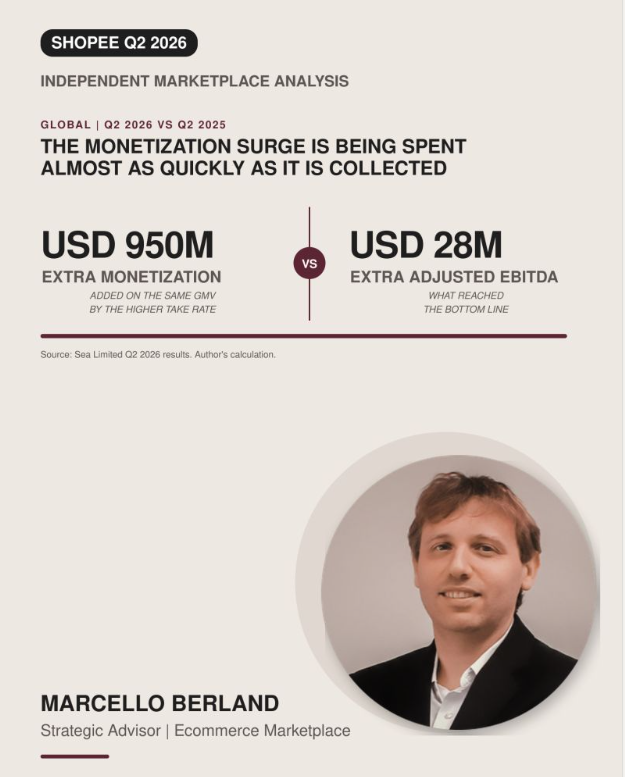
The arithmetic is less flattering: at last year’s rate of capture, Q2 GMV would have generated roughly USD 950 million less in core marketplace revenue, yet Shopee’s adjusted EBITDA rose only USD 28 million. The monetization surge is being spent almost as quickly as it is collected.
The comparison with Mercado Libre sharpens as the platforms cross into each other’s home turf from opposite ends. MELI moved down into Shopee’s low-ticket territory with margins available to burn, and burned them: its BRAZIL direct contribution margin fell from 15.6% to 9.9% in a year. Shopee is moving up into MELI’s higher-ticket stronghold without a comparable profit cushion, so it expanded seller monetization first to finance the advance.
The pressure now falls in different places: MELI is consuming profitability already built without creating a durable source to replenish it, while Shopee is testing how much additional growth it can finance through higher seller charges without materially building its profit cushion.
Shopee’s ceiling in Brazil is no longer only what sellers can absorb. It is also what MELI decides to charge its own. Neither can raise seller charges much further alone. So who moves first?